For My New Photo Gallery Click Here
More Photos In This Series

Sunday, 21 November 2010

A visit to the Macaque Kingdom---Mummies and Babies

  The Macaque Kingdom is on a slope of a high hill and has been a tourist attraction for a number of years. It all started when several monkeys were released by pet owners in the 1920s. In addition to the abundant forest and flora, there is also a reservoir nearby. The rich food and water resources have provided ideal habitats for the monkeys. No wonder their population has soared to close to 2000 today.
 
 Before you even get to the “Monkey Hill’, you can see them wondering around the road everywhere. 


  Surprisingly, many of the adults are carrying small babies.  Some mums are very protective of their babies, 


Others are quite relaxed. 


The babies are very cute. 


The large population has led to a food shortage. Even at very young age, the monkeys have to learn to “demand” food from tourists.


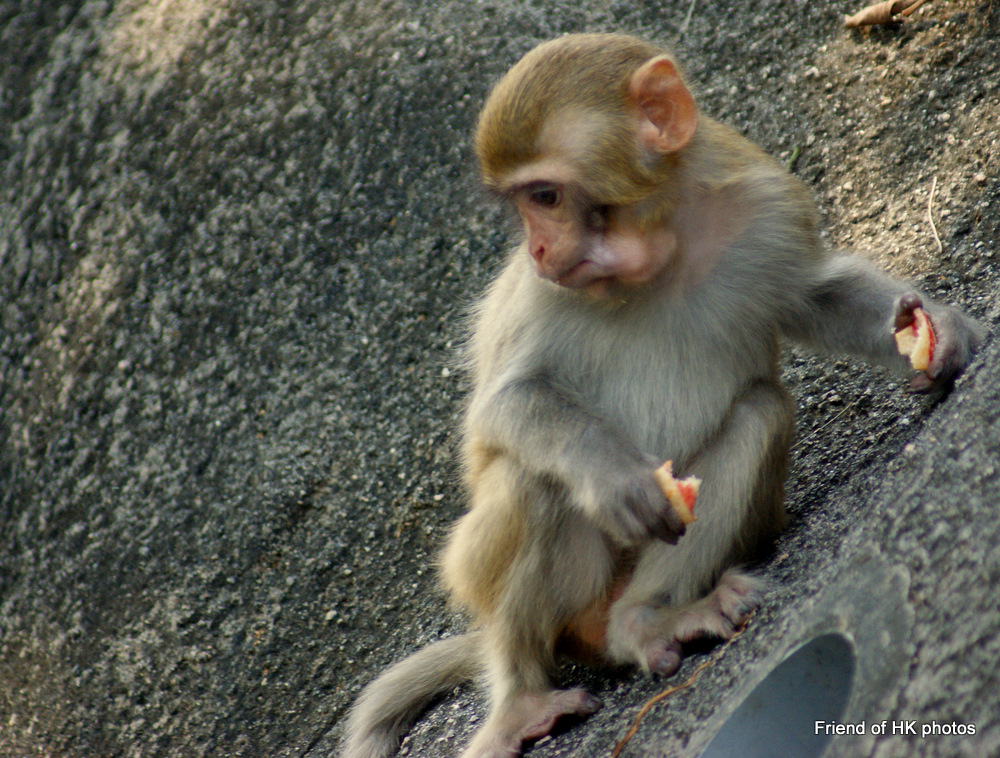

Sometimes, they have to rely on grass for food. To my surprise, they actually prefer the grass roots rather than the leaves.


Once dinner time is over, they walk to the reservoir for a drink. 


What a happy life!

Sunday, 14 November 2010

War in the garden: birds vs snake

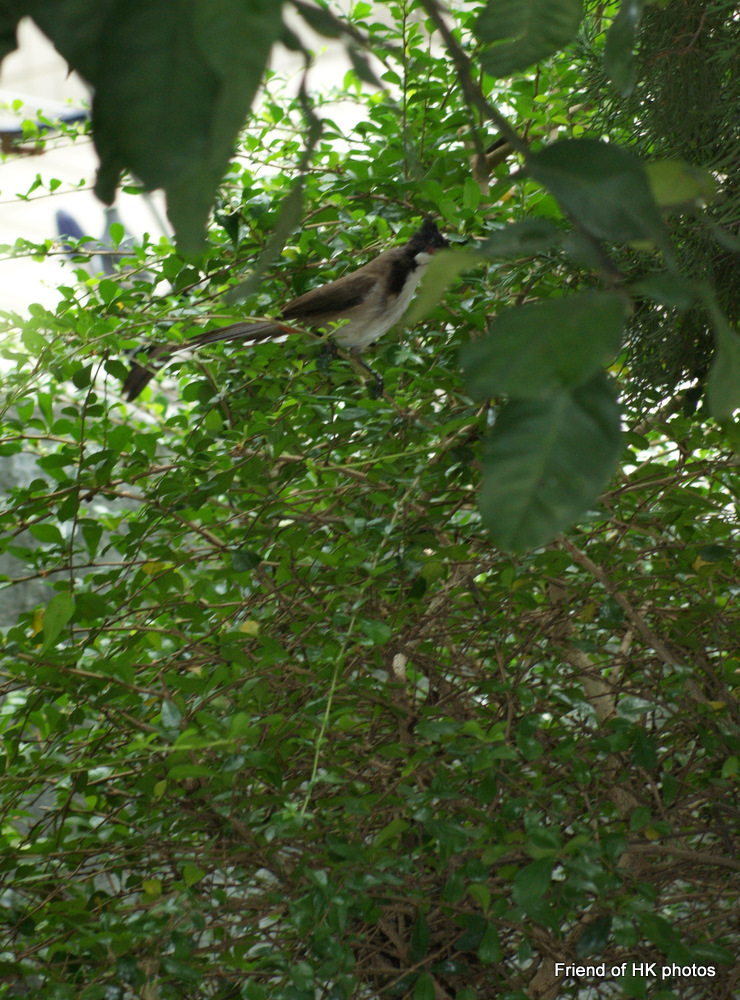
A few weeks ago, I heard the Red-whiskered Bulbuls making a lot of stressful noise in the garden. They would often stand on the big pomelo tree and looked as though they were “shouting” at something underneath.

When I went to investigate, I found that they were actually “screaming” in the direction of a small tree. 

Initially I thought it had something to do with the old nest that a pair of Red-whiskered Bulbuls abandoned last year (the dark shadow in upper center).

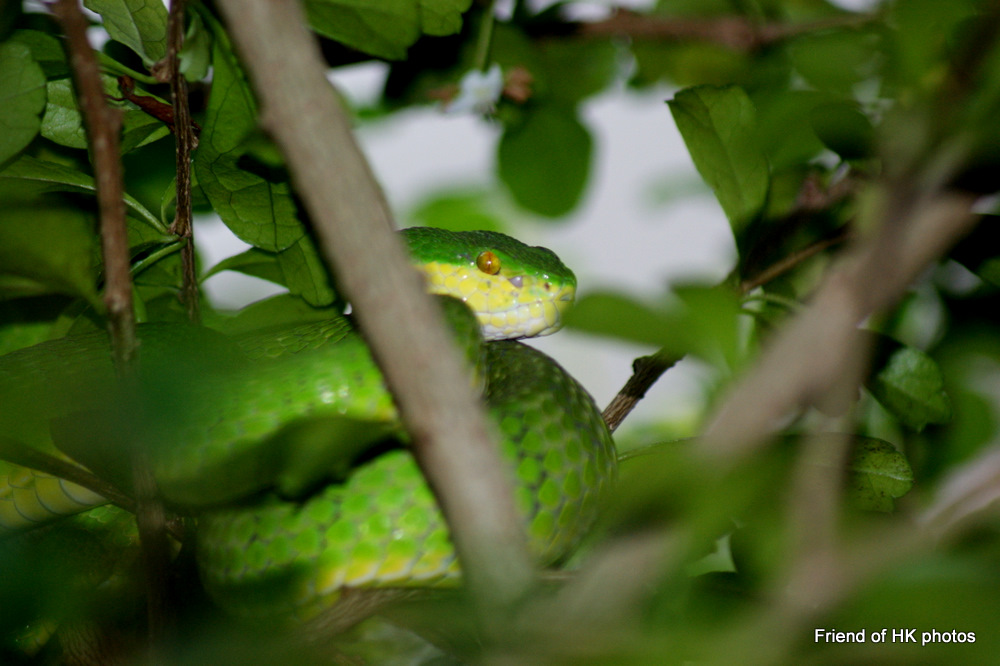
When I got closer to the tree, I noticed a pair of bright eyes staring at me. Actually, a big green snake was resting in the tree!


In fact, the snake was sunbathing in the tree but the birds were not happy about the snake being  in their territory. It seemed that they were trying to scare the snake away from the garden.

In the following days, over a dozen Red-whiskered Bulbuls came to the garden regularly and kept “screaming” at the snake. Some brave ones even got really close to the snake (just above the black knot).


Others were either sitting on the big pomelo tree above 

or keeping their distance from the snake.

The loud stressful noise must have alarmed other birds nearby. Soon, several types of birds came to the garden to investigate, including Common Tailor-birds, 


Oriental Mygpie Robins.


Initially, the snake did not take any notice and continued his sunbathing everyday for about a week.


But the birds seemed so determined that their “shouting” frequency was increased to 3-4 times a day. After tolerating the noisy birds for over a week, the snake was finally fed up and left. It hasn’t returned since.

The Red-whiskered Bulbuls are now back to their happy go lucky nature and the stressful “shouting” noise has been replaced by happy singing sounds.


 I wish I could tell them how much I admire their courage and determination for winning the war against a potentially lethal enemy more than 10 times bigger than themselves.


Tuesday, 9 November 2010

Sleeping Beauty--White-rumped Munia

The White-rumped Munia is a small bird (about 11cm in length) and a resident breeding bird in tropical southern Asia including Hong Kong. 

From their appearance we can see that they are related to the finch family. 
 
They feed mainly on seeds.
 
The White-rumped Munias are often seen feeding in woodlands and urban parks. A few days ago, I was lucky to see a sleeping White-rumped Munia in my local park. I have seen birds sleeping on trees but this was the first time that I encountered a bird sleeping on the ground.

The bed was some dry leaves under the shade of grass. 

I managed to stay a few meters away without waking it up. 

 
After a few minutes, the bird must have sensed my presence. 

I guess it might be very tired because the bird gave me a sleepy look and went straight back to sleep. I was so pleased to have been able to capture this sleeping beauty. 


In fact, this one was not the only bird who didn’t mind me being around. One bird looked straight into my camera. 

Another one even posed for this portrait.

I was so impressed with their feathers which looked like a big shawl on their shoulders.  

 
Another common bird in South Asia, the Scaly-breasted Munia, looks very similar to the White-rumped Munia, except its underparts are white with black scale markings.