For My New Photo Gallery Click Here
More Photos In This Series

Sunday, 12 February 2012

Colourful Tree birds


It is not only shore/water birds that enjoy the warm winter in Hong Kong, many tree birds from the north relish the weather too. So every winter we are rewarded with many beautiful forest birds.  

This  tiny Yellow-Browed Warbler (about 10cm long and 5g in weight) may have traveled from as far as Siberia to spend the winter here. Imagine how delighted I was to see this one in my garden.


The Dusky Warbler is slightly bigger than the Yellow Browed Warbler and also a long distance traveler. 


This  Plain Prinia or Wren Warbler, however, is a resident in Hong Kong. 


They are often seen feeding in wetland and grassland. 


The Daurian Redstart (male), 


Azure-winged Magpie,


Grey Wagtail,


and Chinese Grosbeak are also delightfully coloured migrants. 


Of course, the winter is not the same without our residents-----my garden friends the Common Tailorbird, 


the Red Whiskered Bulbul,


and the beautiful Japanese White-eye.


Wednesday, 8 February 2012

Get Up Close and Personal With The Waders (3)-----Plovers


Many of the Plover family shorebirds are long-distance migratory birds and are often seen feeding on mudflats.  

Kentish Plover


Unlike most of the waders, the Plovers have relatively short bills but big eyes.

Kentish Plover


Little Ringed Plover (Winter Plumage)

Little Ringed Plover (Summer Plumage)


They prefer to keep away from water and are often spotted on dry ground. Unlike the longer billed waders, the plovers hunt by sight.


In order to catch the prey, some Plovers, such as the Little Ringed Plovers, use one of their feet to scratch the ground first,  


and then peck at the disturbed prey with their bill.


Monday, 30 January 2012

Get Up Close and Personal With The Waders (2)---Marsh Sandpiper


Like the Pied Avocet, the Marsh Sandpiper is another species that takes advantage of the warm winter in Hong Kong.


Unlike the Pied Avocet, the Marsh Sandpipper has a fine and needle-like thin bill with a white “eyebrow” above the eye. 


They are often seen wading in shallow water, 


as well as mudflats,


looking for small aquatic insects. 
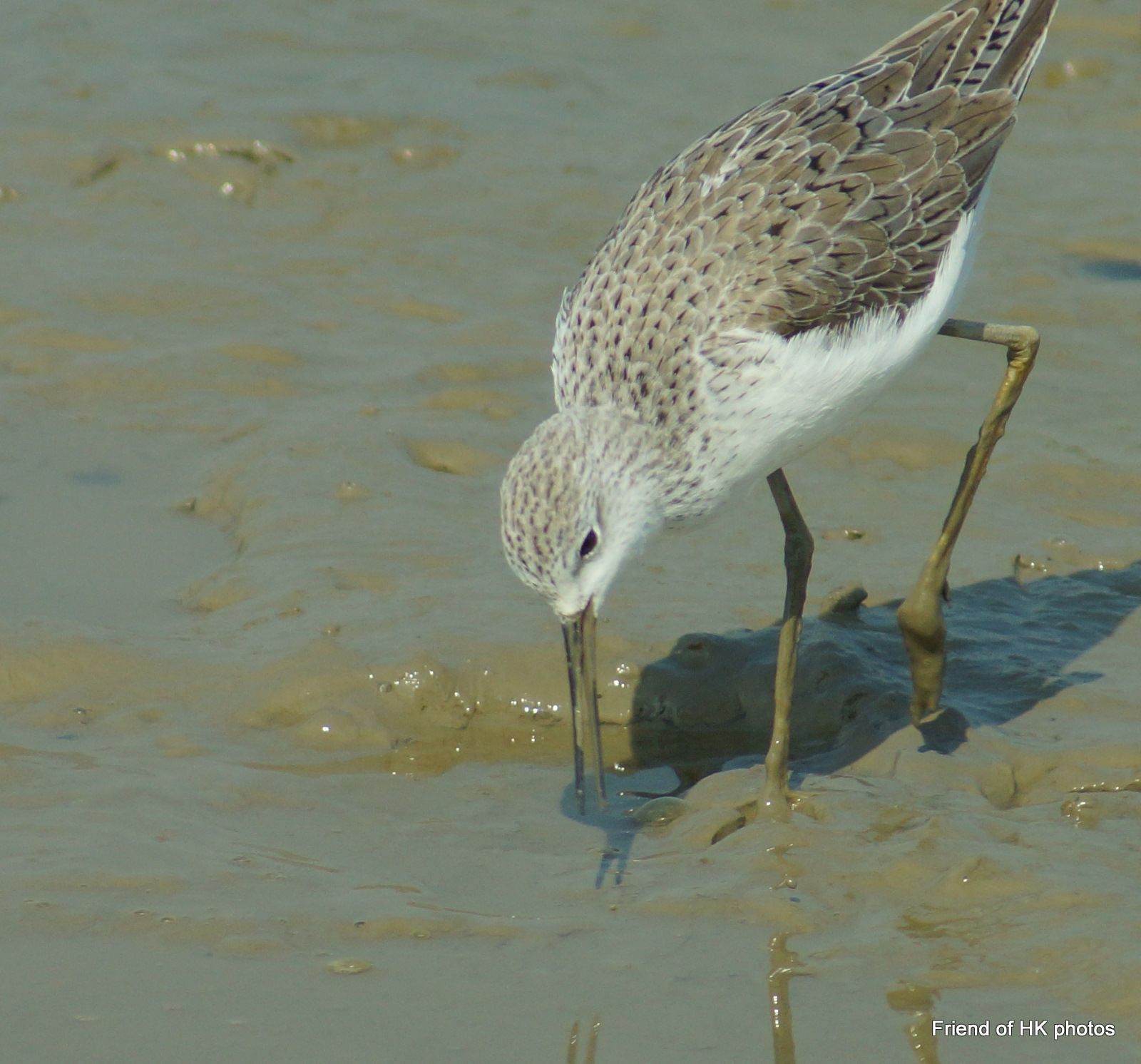


Occasionally, they even dip their head in the water for a quick catch.


   The fact that the appearance of Marsh Sandpiper is very similar to the Common Greenshank makes it very hard to distinguish these two species. A correction would be appreciated if there has been a case of mistaken identity.